What an AI website builder does
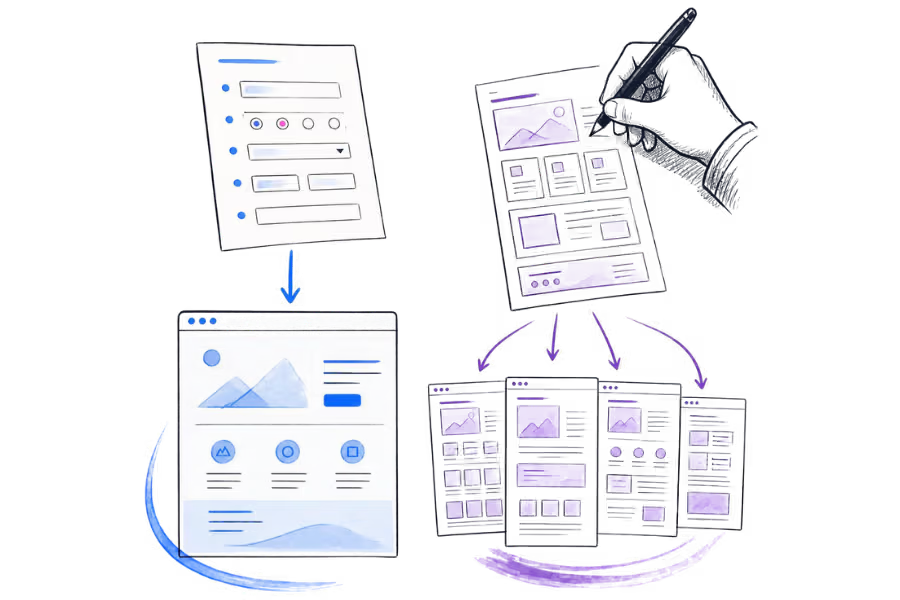
An AI website builder is designed to shorten the distance between describing a business and having a usable website to edit. Instead of starting with a blank design, you normally provide information about the business, its services, audience, style and other requirements. The builder then uses that information to create an initial website structure and content.
The exact process varies between builders. Some use a questionnaire, some work from a written prompt and others combine guided questions with templates or generated content. The result is still a starting point rather than a guarantee that every part of the website will be exactly right.
You may still need to edit the wording, replace images, check contact details, adjust sections and make sure the final website represents the business accurately.
What custom web design means
Custom web design starts from the requirements of the individual business rather than from a generated starting point. The process can involve planning the site's structure, deciding what each page needs to accomplish, developing the visual direction and refining the content and layout around the business.
“Custom” does not necessarily mean that every element is coded from scratch. A designer can still use established web technologies, components and development tools. The important difference is that the website is being shaped around the project's requirements rather than primarily generated as a general starting point.
This can be useful when the website needs a particular structure, distinctive visual treatment, specialised functionality or a more involved content strategy.
Compare the process
The biggest practical difference is often the amount of work that happens before and during the build.
| AI website builder | Custom web design |
|---|---|
| Starts from guided information, prompts or a questionnaire | Starts from a discussion of the business and project requirements |
| Generates an initial structure more quickly | Structure is planned and developed around the project |
| Usually relies more on the user refining the result | Usually involves more direct design and development input |
| Works well when the required site structure is relatively straightforward | Useful when the structure or functionality needs more individual planning |
Neither process removes the need for decisions. With an AI builder, you still need to explain what the business does and review what is produced. With custom design, more of those decisions happen during the planning and design process.
Compare flexibility and control
Flexibility is one of the areas where the difference becomes more noticeable as a website becomes more complicated.
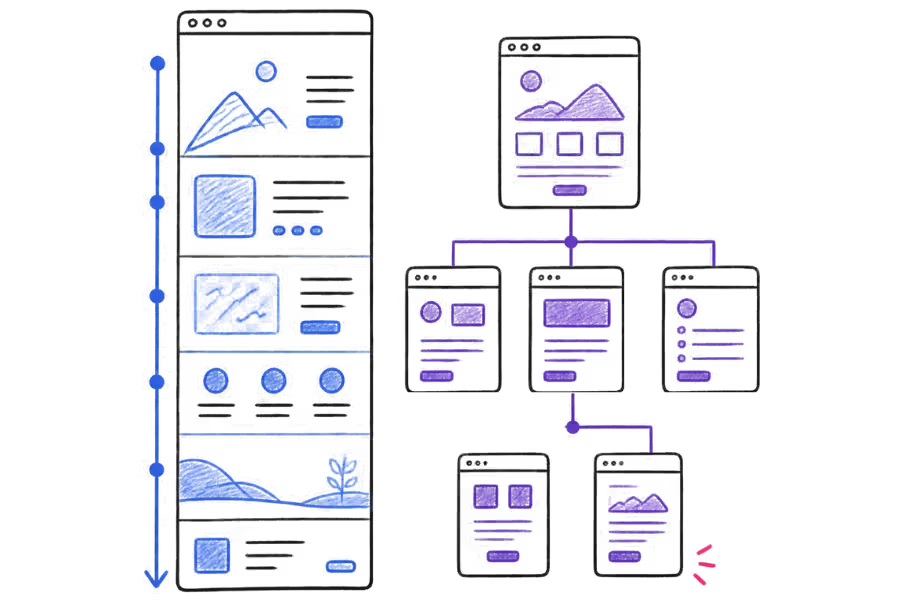
An AI website builder can be a practical fit when you need a focused website with familiar sections such as an introduction, services, about information, contact details and calls to action. A defined structure makes it easier for a guided builder to produce a coherent starting point.
A more involved website may need a particular page hierarchy, unusual content relationships, custom interactions, specialised forms or integrations. Those requirements can make a custom process more appropriate because the website can be planned around those requirements from the beginning.
There is also a difference between having editing control and having design control. A builder may let you change text, images, colours and sections without giving you complete control over how the underlying website is structured.
Consider content and branding
The quality of the information you provide affects either approach. A website cannot accurately communicate a business if the underlying information is vague or incomplete.
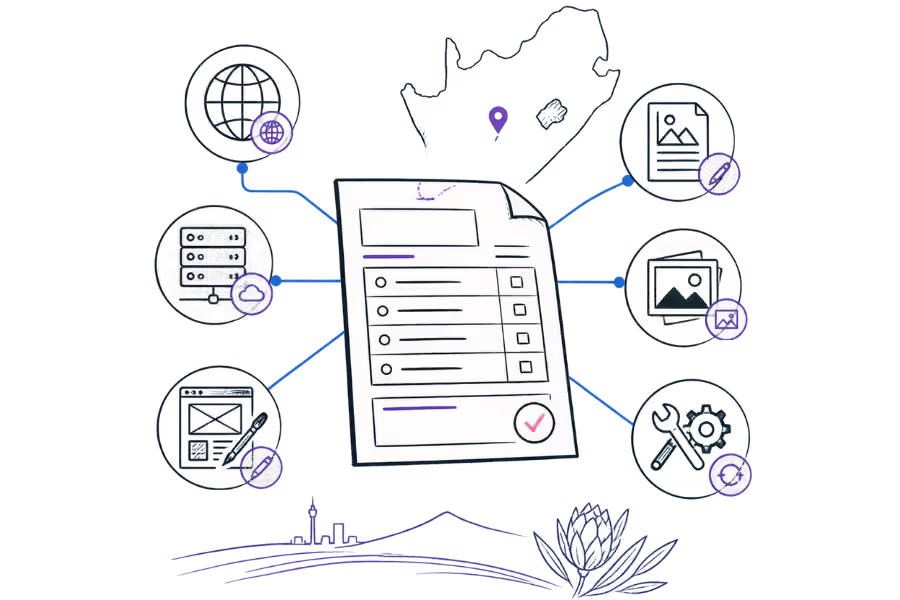
Before starting, it helps to have the business name, services, contact details, service areas, preferred calls to action and a basic description of the intended customers. You should also know which parts of the business need the most attention on the website.
Images are another consideration. An AI website builder may provide ways to work with generated, supplied or selected images, depending on the platform. Custom design can also use supplied photography, licensed imagery or other agreed assets. In either case, images should support the business rather than simply filling empty spaces.
If the brand has a distinctive visual identity, unusual layouts or very specific presentation requirements, explain those requirements early. It is easier to plan around them than to try to force them into a finished template later.
When an AI website builder can make sense
An AI website builder may be worth considering when the main goal is to establish a clear online presence without starting with a large design and development project.
It can be a practical option for a new business, a simple service business, a personal professional presence or a focused landing page where the required information can be explained in a relatively small number of sections.
- You want to get an initial website structure together quickly.
- The website requirements are relatively straightforward.
- You are comfortable reviewing and editing the generated result.
- You do not need highly specialised functionality at the outset.
- You expect the first website to be a starting point that can evolve.
It is still important to check what the particular builder includes, what you can edit, how hosting works and what happens if you later need functionality outside its available options.
When custom web design can make sense
Custom web design may be more appropriate when the website itself is an important part of how the business presents its products or services and the requirements cannot be described well by a simple standard structure.
Examples can include businesses with several distinct services, larger content structures, more involved customer journeys, specialised forms, integrations or a strong requirement for a particular visual identity.
- The website needs a structure designed around specific business processes.
- The visual direction needs to be highly individual.
- The site needs functionality that a standard builder does not provide.
- There are several pages or content types that need careful organisation.
- You want a designer involved in planning and refining the website.
Custom design can also be useful when the website is expected to become a more substantial business tool over time. Planning the structure early can reduce the need to work around a starting structure that was never designed for the eventual requirements.
You do not have to treat it as permanent
Choosing an AI website builder does not necessarily mean that you must use the same approach forever. A small business can start with a focused website, learn which information customers actually need and then invest in a larger website when the requirements become clearer.
The reverse is also worth considering. A business with a custom website may later simplify its online presence if the original structure has become unnecessarily complicated.
What matters is understanding what will be involved if you change platforms or approaches. Website content, images, domain settings, hosting arrangements and integrations may need to be moved or configured again. The practical details depend on the systems involved.
If you are still deciding how much website you actually need, it can also help to compareone-page and multi-page websitesbefore choosing a build approach.
The simple version
An AI website builder and custom web design are different ways of approaching the same basic task: creating a website that represents a business online.
An AI builder puts more emphasis on guided input and generating a starting point. Custom web design puts more emphasis on planning, individual design decisions and development around the specific project.
The useful question is therefore not simply which one is better. Ask what the website needs to do now, how much control you need over its structure and design, and whether those requirements are likely to become more involved later.
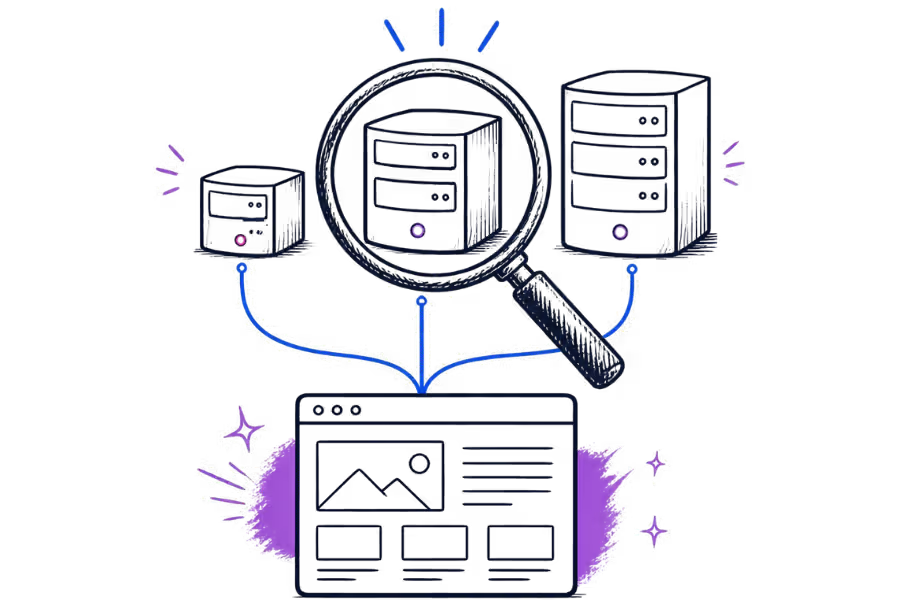
PalmHost provides bothAI Website BuilderandCustom Web Designoptions, so you can choose the approach that fits the project rather than forcing every website through the same process.