What a one-page website is
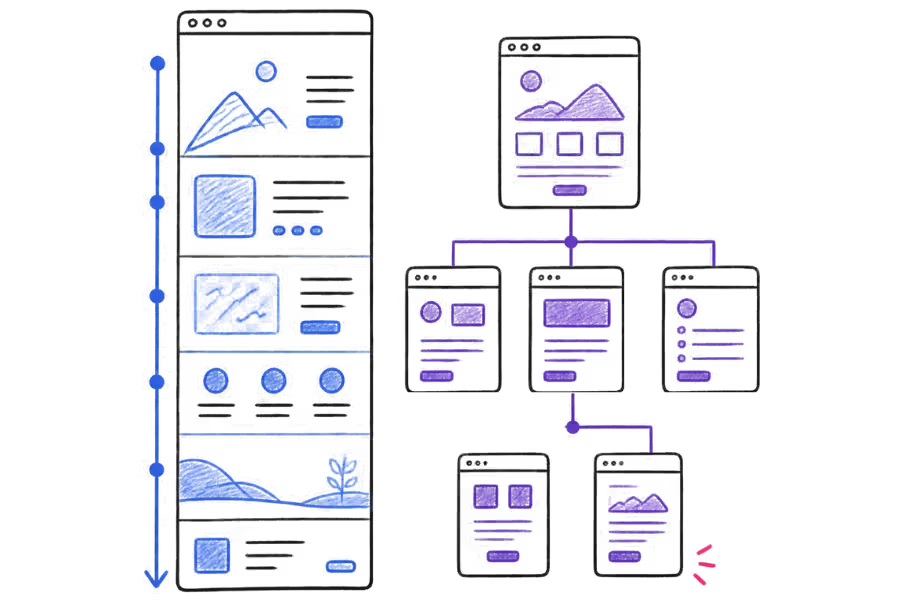
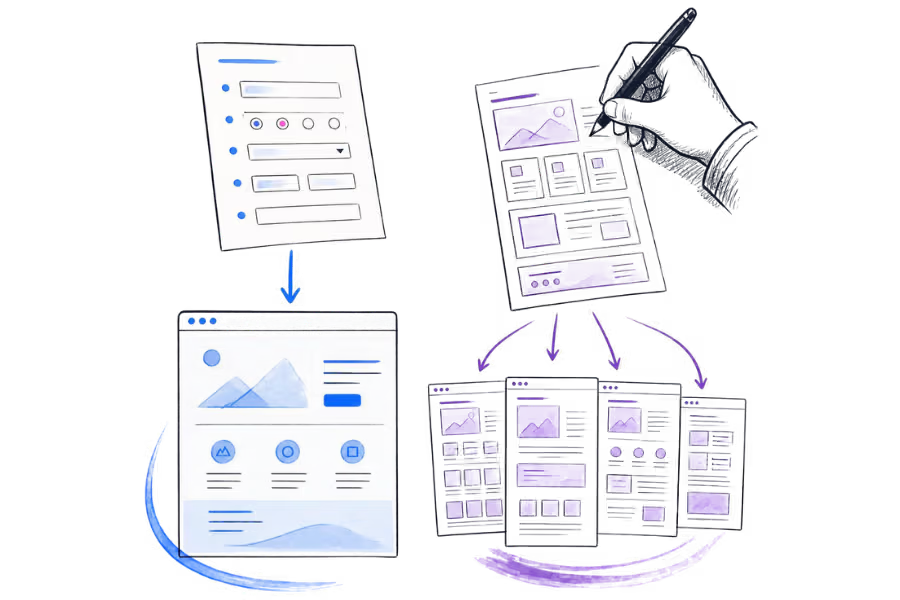
A one-page website puts the main information about a business on a single web page. Visitors move through the page to find sections such as the introduction, services, about information, contact details and calls to action.
A navigation menu can still be used. Instead of taking visitors to separate pages, menu links can move them to different sections on the same page.
This structure can work particularly well when the business has a focused offering and there is not a large amount of information that needs to be separated into individual pages.
What a multi-page website is
A multi-page website separates information into individual URLs. A typical business website might have a home page, an about page, separate service pages, a contact page and supporting articles or guides.
This structure gives each subject more room. Instead of placing every service on one long page, for example, a business can give each important service its own page with its own content and supporting information.
The number of pages should still have a purpose. Adding pages simply to make a website appear larger can make navigation harder and leave visitors with thin or repetitive content.
Compare the user experience
The main difference visitors notice is how they move through the information.
| One-page website | Multi-page website |
|---|---|
| Visitors scroll through a single main page | Visitors move between separate pages |
| Works well when the information is closely connected | Works well when subjects need their own space |
| Navigation can be very simple | Navigation can organise a larger amount of information |
| Less page structure to maintain | More pages and relationships to manage |
Neither approach automatically creates a better experience. A visitor looking for three or four key pieces of information may find a focused one-page site easy to follow. A visitor comparing several services may find a multi-page structure easier because each service has a clear destination.
Think about content and navigation
The amount and type of content should influence the structure.
Suppose a business offers three closely related services. A one-page website could introduce the business, explain all three services, answer a few common questions and finish with contact information. There may be little reason to divide that information into several pages.
Now consider a business with eight different services, several service areas and detailed information for each offering. Putting everything onto one page can create a long sequence of sections that visitors have to work through to find a particular subject.
A multi-page structure can separate those subjects and give the navigation a clearer role. Each page can then focus on one main purpose rather than trying to answer every question in one place.
The same principle applies to calls to action. A one-page website might repeat a contact or enquiry button at sensible points down the page. A multi-page website can use different calls to action based on the subject of each page.
Consider search and content growth
Search visibility is another reason to think about the structure before building the website. A search engine can index individual pages, but the usefulness of those pages still depends on the quality and relevance of the content.
A one-page website can target a focused subject well when the business has a relatively small amount of relevant information. The page can bring the important topics together in one place.
A multi-page website gives you more opportunities to create focused pages for different services, locations or subjects. It also makes it easier to expand into articles and guides without turning the home page into a very long collection of unrelated information.
This does not mean that adding more pages automatically improves search performance. Each page should have a clear purpose and provide useful information. Repeating the same content across many pages is not a substitute for a well-planned website.
When a one-page website can work well
A one-page structure may suit a business when the website has a focused purpose and the amount of information is manageable on one page.
- A new business needs a straightforward online presence.
- The business has a small number of closely related services.
- The main goal is enquiries, calls or another single action.
- There is not yet enough useful content to justify many pages.
- The website is intended to introduce a business rather than provide a large information library.
A one-page site can also be a sensible starting point when a business wants to establish its online presence first and expand the website later.
When a multi-page website can make more sense
A multi-page structure may be more suitable when visitors need to understand several distinct subjects or when the business expects the website to grow.
- The business has several distinct services or products.
- Different services need detailed explanations.
- The website needs dedicated pages for different customer needs or locations.
- The business plans to publish useful articles or guides.
- Visitors need to reach specific information without scrolling through one very long page.
A larger structure can also make ongoing content management more straightforward because new information has somewhere appropriate to live.
You can start small
Choosing a one-page website does not mean you have to keep it that way permanently. A business can begin with the most important information and add dedicated pages when there is a clear reason to do so.
The important part is to plan the first version with the next stage in mind. If you already know that separate service pages, an online shop or a growing article section are likely to follow, it is useful to choose a structure and platform that can accommodate that change.
The reverse is also possible. A website that has grown into many pages can sometimes be simplified if some pages no longer serve a useful purpose.
If you are also deciding how the website should be built, compareAI website builders and custom web designalongside the page structure. The two decisions are related, but they are not the same decision.
The simple version
Choose a one-page website when the business can communicate its important information clearly without dividing it into many separate subjects.
Choose a multi-page website when visitors need more detailed information, when services deserve their own pages, or when the website is expected to grow into a larger source of information.
The number of pages should follow the needs of the business and its visitors. A well-planned five-section one-page website can be more useful than a fifteen-page website filled with repetitive content, while a business with many distinct services may quickly outgrow a single page.
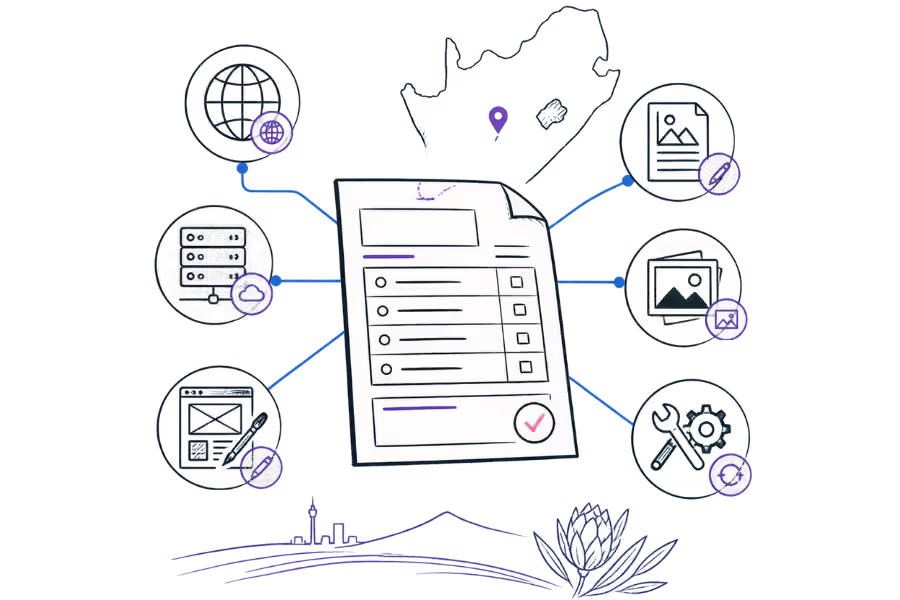
PalmHost can help you plan either approach throughCustom Web Designor help you start with a more focusedAI Website Builderwebsite.