What a small business website can cost
Publicly advertised South African website prices in 2026 cover a very wide range. Some providers advertise tightly scoped small business websites for around R1,000 to R2,000 once-off, while other published packages for small business websites run into several thousand rand or more. More involved custom projects can move well beyond that.
For example, current advertised prices include small website packages below R2,000, five-page or similar business websites around R3,000 to R6,500, and larger or more customised business websites above R10,000. These are examples from individual providers rather than an official South African industry tariff.
Some published pricing guides place professionally built small-business websites in an even broader range, depending on customisation, functionality, content and other project requirements.
What you are actually paying for
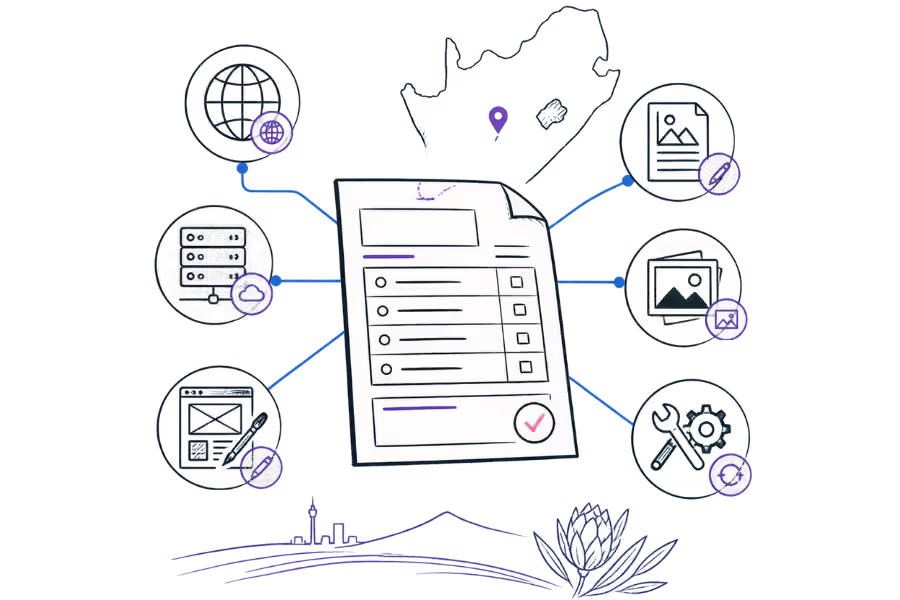
A website price is normally paying for a combination of work rather than simply a collection of web pages.
- Planning the website structure and user journey.
- Designing the visual layout and responsive behaviour.
- Building the pages and configuring the website platform.
- Adding and formatting the supplied or created content.
- Setting up forms, maps, social links or other agreed features.
- Testing the website on different screen sizes and browsers.
- Preparing the website for launch and connecting the domain.
A project that includes more of this work will naturally have a different price from one where the customer supplies finished text, photographs and a fixed structure and the provider mainly assembles the pages.
The main cost factors
Several factors can change the cost of a small business website. Page count is only one of them.
Number of pages
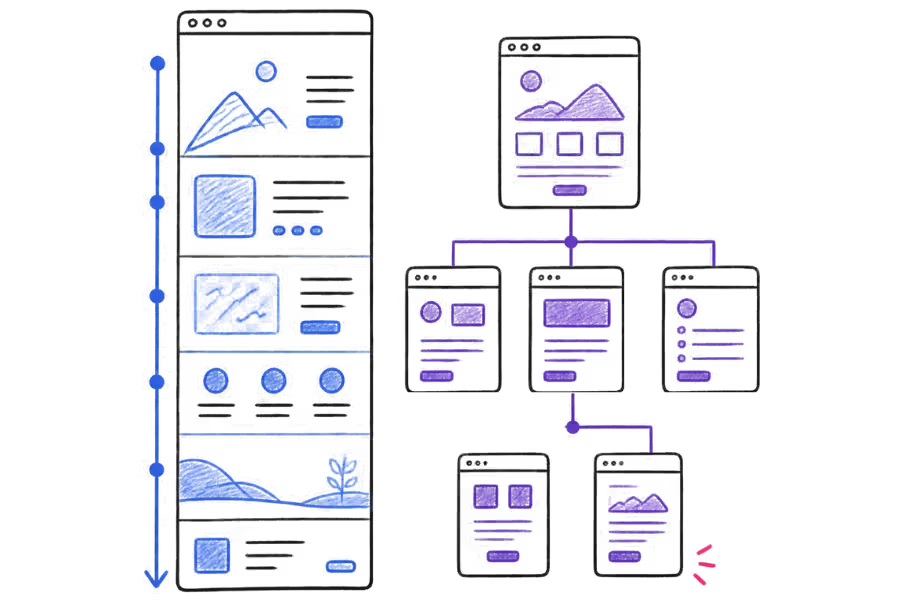
A focused one-page website generally involves less content and structure than a website with separate pages for several services, locations, team members, case studies and other subjects.
More pages can mean more design, content formatting, navigation, testing and revision work. However, page count should still follow the information the website needs to communicate rather than being used as the only measure of value.
Design and customisation
A template-based or tightly scoped build can require less design work than a website where the visual direction, page layouts and components are developed specifically for the business.
Content
Website copy, photography, product information and other content can be supplied by the business or created as part of the project. Writing, editing, photography, image sourcing and other content services can therefore change the total cost.
Functionality
A basic contact form is very different from an online booking system, membership area, customer portal, payment integration or online shop. Specialised functionality normally requires additional configuration, testing and sometimes custom development.
Integrations
Connecting a website to third-party services can add work. Examples include payment gateways, booking systems, email platforms, accounting tools, customer relationship systems and external APIs.
Once-off versus ongoing costs
One of the easiest ways to misunderstand a website quote is to look only at the design price. A website can have both once-off and ongoing costs.
| Cost | Usually paid | What it covers |
|---|---|---|
| Website design and development | Once-off or staged | Planning, design, build and agreed launch work |
| Domain registration | Recurring | The registration and renewal of your domain name |
| Web hosting | Recurring | The hosting environment where the website runs |
| Business email | Recurring | Mailboxes using your business domain, when purchased separately |
| Maintenance or support | Recurring or as needed | Updates, changes, troubleshooting or other agreed support |
| Specialised services | Varies | SEO, content, photography, integrations or other additional work |
A quote should make it clear which of these costs are included and which will be billed separately.
What a basic website might include
A practical small business website might contain a home page, an about section, service or product information, contact details and clear ways for visitors to enquire. Depending on the business, it may also include testimonials, a location map, a gallery or links to social profiles.
A basic website does not necessarily mean a poor website. If the business has a focused offering, a smaller structure can make the information easier to understand and maintain.
The important question is whether the website gives visitors enough information to understand what the business does and what they should do next.
When a website costs more
A website usually becomes more involved when it needs more than a straightforward business presence.
- Many service or location pages.
- Custom page layouts or interactive elements.
- Online shops and product catalogues.
- Booking or appointment functionality.
- Customer accounts or private areas.
- Payment or other third-party integrations.
- Large amounts of content that need preparation or migration.
- Custom functionality that is not available through existing tools.
This is why a quote for a five-page brochure website should not be compared directly with a quote for a five-page website containing custom forms, integrations and complex customer journeys. The page count is the same, but the work is not.
How to compare website quotes
When you receive two or three quotes, compare the scope before comparing the totals.
- How many pages or sections are included?
- Who supplies the written content?
- Who supplies or sources the images?
- Is mobile-responsive design included?
- Are forms and other required functions included?
- Is the domain included, and for how long?
- Is hosting included, and what happens after the first period?
- Are revisions included?
- What happens after the website launches?
- Does the quoted price include VAT?
Ownership is another useful question. Make sure you understand who controls the domain, website account, hosting account and important third-party services after the project is complete.
A very low quote may be perfectly suitable if the scope is genuinely small. A higher quote may also be reasonable when it includes substantial planning, content, design or development work. The written scope gives you the context needed to compare them.
Where hosting and domain costs fit
The website build is only one part of the ongoing cost of having a website online.
PalmHost currently offers Web Hosting packages from R79 per month, with higher packages at R139 and R239 per month. The appropriate package depends on the website and hosting requirements rather than simply choosing the highest allowance.
PalmHost Business Email is priced separately at R49 per mailbox per month. A business that needs three mailboxes, for example, would need to budget R147 per month for those mailboxes in addition to any separate website and domain costs.
Domain registration and renewal are also separate costs unless they are specifically included in a website or hosting package. Check the renewal price rather than looking only at a promotional first-year price.
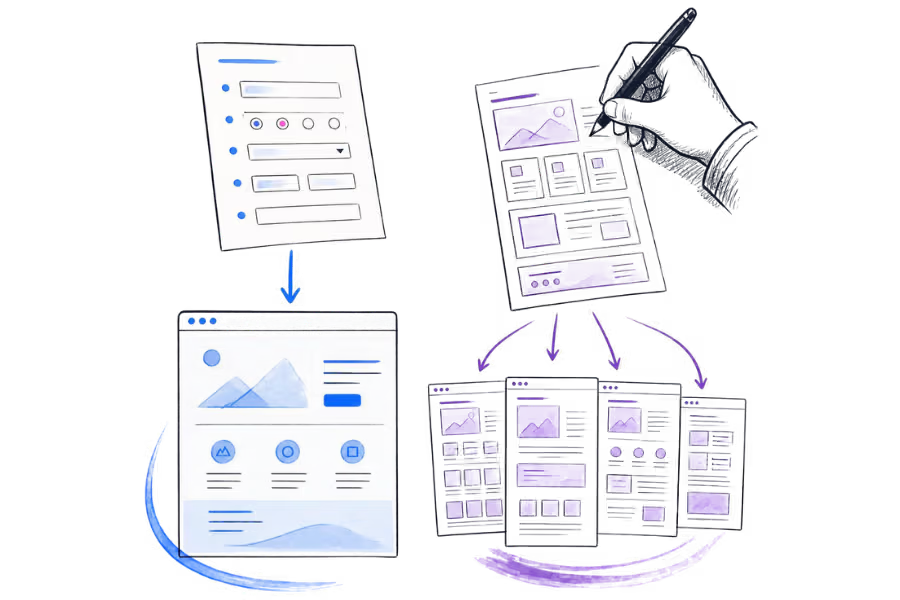
If you are still deciding what level of website you need, it can help to first compareone-page and multi-page websitesand then consider whether anAI website builder or custom web designbetter matches the project.
The simple version
There is no single “correct” price for a small business website in South Africa. Current advertised prices show a broad market, from tightly scoped low-cost websites to more involved custom projects costing several thousand rand or considerably more.
The useful starting point is to define what the website needs to do. Decide how much content it needs, which functions are required, who will provide the content and how much design or development work is involved.
Then separate the once-off build cost from recurring costs such as the domain, hosting, email and ongoing support. This gives you a more realistic picture of what the website will cost to launch and keep running.
If you need a website for your business, PalmHost can discuss the requirements and provide a scope-basedCustom Web Designquote rather than assuming every business needs the same package.