What an online shop costs in South Africa
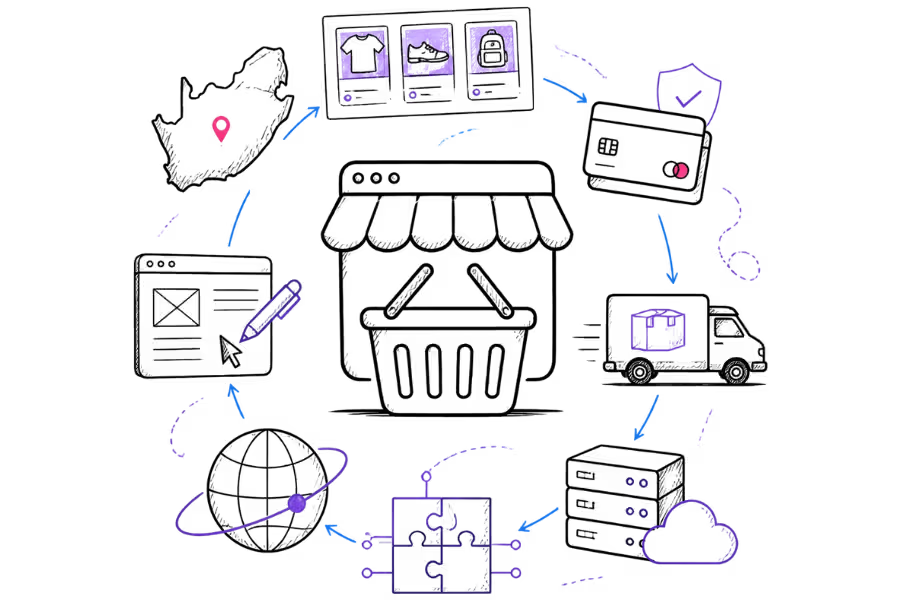
There is no single price for an online shop. A small store with a few products, standard checkout and simple delivery rules is a very different project from a shop with hundreds of products, product variations, stock synchronisation, courier integrations and custom business rules.
Published South African pricing guides in 2026 show that range quite clearly. Examples for professionally built stores commonly start in the region of R8,000 to R20,000 for simpler projects, while more involved stores can move into the R30,000 to R80,000+ range. More complex custom systems can cost considerably more. These are market examples rather than a standard industry tariff, and individual quotes depend heavily on scope.
A practical way to think about the budget is to separate the project into three parts:
- the initial store build and setup;
- the services and software you pay for while the shop runs; and
- the transaction, delivery and maintenance costs that depend on how you sell.
That distinction matters because a quote can look affordable when it only covers the build. The real cost of running an online shop is ongoing.
Separate the build cost from the running cost
When someone asks how much an online shop costs, I would first ask whether they mean the cost to build it or the cost to operate it. They are related, but they are not the same expense.
Once-off build costs
The initial project may include design, page creation, product setup, category structure, payment configuration, delivery rules, testing, mobile optimisation and basic training. If the shop needs custom functionality or integrations, those can add substantially to the development work.
Ongoing costs
Once the store is live, you may need to budget for hosting, domain registration, software or platform subscriptions, paid extensions, maintenance, payment processing, courier charges and marketing. Some of these are fixed monthly or annual costs. Others only occur when you make a sale or use a particular service.
This is why two stores with similar-looking designs can have very different total costs. The visible website is only one part of the system behind the shop.
Ask for both the initial project cost and the expected recurring costs. A cheaper build is not necessarily cheaper to operate if it relies on several paid services or requires more manual work.
What you are paying for when a shop is built
An online shop is more than a set of product pages. The build has to connect the customer-facing website with the parts that handle the order.
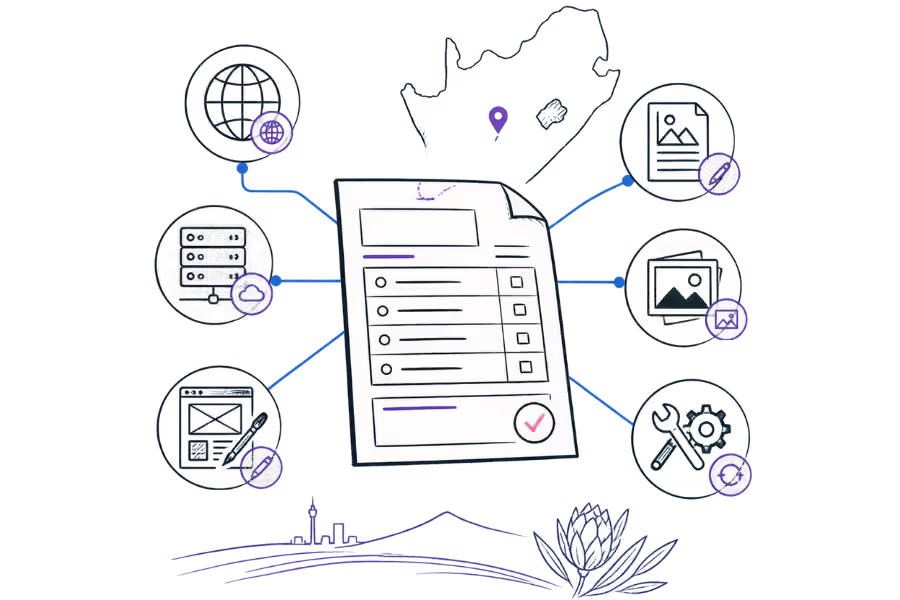
Depending on the project, a professional build may include:
- the shop layout and visual design;
- product and category structure;
- product variations such as size or colour;
- shopping cart and checkout configuration;
- payment gateway setup;
- shipping and delivery rules;
- tax and pricing configuration;
- customer account and order functionality;
- basic search engine optimisation and product metadata;
- mobile and desktop testing; and
- training or documentation for managing products and orders.
Not every project needs all of these at the same level. A small shop might have a straightforward catalogue and one delivery method. A larger business may need multiple delivery zones, stock rules, product variations or connections to other systems.
The more of the business process that the website has to handle, the more important the planning and configuration become.
Product count and catalogue complexity matter
The number of products is one of the easiest ways for an online shop project to become larger than expected, but the number alone is not the whole story.
Ten simple products with one price each are relatively straightforward to organise. Ten products with several sizes, colours, images, stock levels and different prices for each variation require more setup and testing. Hundreds of products multiply that work further.
Product data can take time
Someone needs to prepare product names, descriptions, prices, images, categories, variations and other information. If the data is already available in a clean spreadsheet or another system, the work may be easier. If every product has to be researched, edited and entered manually, the project can take considerably longer.
Variations and stock rules add complexity
A clothing shop, for example, may need size and colour combinations. A furniture business may have different dimensions and finishes. A business selling made-to-order products may need options that change the price or delivery requirements.
These details should be discussed before a quote is accepted. The phrase “up to 50 products” does not necessarily describe the same amount of work for every type of shop.
Payments, shipping and integrations add cost
Customers need a reliable path from product selection to completed order. That means the payment and delivery side of the shop deserves as much attention as the design.
Payment processing
South African online shops can use payment providers that support methods such as cards, EFT and other local payment options. The provider may charge transaction fees, and the exact pricing depends on the provider, account and payment method.
These fees are normally separate from the website development cost. They also mean that your cost per order can change as sales volume changes.
Shipping and delivery
A shop selling digital products may not need physical delivery at all. A retailer sending parcels across South Africa needs a different setup. You may need flat-rate shipping, location-based rates, free-shipping thresholds, collection options or a connection to a courier service.
Other integrations
Integration requirements can have a much larger effect on cost than the number of pages in the website. Examples include stock systems, accounting software, courier platforms, marketplaces, email marketing tools and customer relationship systems.
If two systems need to exchange information automatically, the exact integration method matters. A ready-made plugin may be relatively simple. A custom connection can require planning, development and ongoing maintenance.
Compare platforms before you compare quotes
The platform you choose affects both the initial build and the ongoing cost. There is no universal answer for every business.
| Approach | Typical cost pattern | What to consider |
|---|---|---|
| DIY hosted platform | Lower initial cost, recurring platform fee | You do more of the setup and management yourself. |
| Self-hosted WooCommerce | Flexible build cost plus hosting and optional extensions | More control, but more responsibility for configuration and maintenance. |
| Professionally built platform store | Higher initial cost, depending on design and setup | You pay for planning, configuration, design and implementation. |
| Custom ecommerce development | Higher development cost | Usually justified by specific requirements that standard platforms cannot handle easily. |
A hosted platform can simplify some technical responsibilities, while a self-hosted store can give you more control over the website and its extensions. The important thing is to compare the total setup and running requirements rather than looking at the monthly platform fee on its own.
How to compare online shop quotes
If you receive three quotes for an online shop, do not compare only the final numbers. First check whether the quotes are actually for the same scope.
Ask each provider:
- How many products are included?
- Are product variations included?
- Who loads the products?
- Is the design based on a template or custom work?
- Which payment gateway will be configured?
- Is shipping configuration included?
- Are paid plugins or extensions included in the price?
- Are hosting and the domain included, and for how long?
- What happens if you need more products later?
- Is training included?
- What support or maintenance is available after launch?
- Are any integrations included or quoted separately?
This can explain a large price difference between two apparently similar proposals. One may include product loading and payment setup, while another may only cover the website itself.
Also check whether quoted prices include VAT. South Africa's VAT rate is currently 15%, so a quote excluding VAT will not represent the final amount you pay if VAT is applicable.
When a simple online shop is enough
A small business does not automatically need a complex ecommerce system. If you have a modest product range, standard payment needs and straightforward delivery, a platform such as WooCommerce or a hosted ecommerce service may provide everything you need.
Keeping the first version focused can also make it easier to manage. You can start with the products and order process customers actually need rather than paying for features that may never be used.
This does not mean cutting corners on the important parts. Product information, checkout, payment configuration, delivery rules and mobile usability still need to be tested properly.
When a more complex store makes sense
A more expensive ecommerce project can be justified when the business genuinely needs more than a standard shop setup can provide.
Examples include:
- large or highly varied product catalogues;
- complex product configuration;
- real-time stock connections;
- accounting or ERP integration;
- multiple warehouses or delivery rules;
- customer-specific pricing;
- subscription or recurring orders;
- marketplace or supplier integrations; or
- custom checkout or ordering workflows.
These requirements should be identified before development begins. Adding them after the store has been built can cost more than planning for them from the start, particularly when they affect the underlying product, order or stock structure.
If your current shop can operate comfortably with a standard platform and a small number of integrations, start there. You can revisit the architecture when the business has a clear requirement that the existing setup cannot handle.
The simple version
An online shop in South Africa can range from a relatively small DIY project to a substantial custom development project. Current 2026 published pricing examples place professionally built small stores in very different bands, which is a useful reminder that the scope matters more than the label “online shop”.
Before you set a budget, work out:
- how many products you will sell;
- how complicated those products are;
- how customers will pay;
- how orders will be delivered;
- which other systems need to connect to the shop; and
- who will manage products, orders and updates after launch.
Then separate the once-off build cost from the ongoing costs. That gives you a much more useful picture than asking for an online shop price without defining what the shop needs to do.
If you are also comparing the cost of a normal business website with an online shop, our guide tosmall business website costs in South Africacovers the other side of that decision.